Texas Offshore Wind Energy (TOWER) and the Offshore Wind Law (OWL) Conferences
2010 -2014
For a number of years, this was the official website for the Texas Offshore Wind Energy (TOWER) and the Offshore Wind Law (OWL) Conference.
Content is from the site's 2010 -2014 archived pages as well as outside sources and press releases.
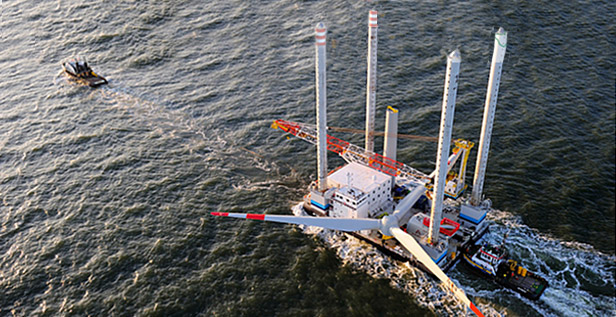
Texas to become first US state with offshore wind energy
Sunday, 10 October 2010 /www.renewableenergymagazine.com/
The first offshore wind energy turbine in the US will be installed off the Texas coast by the end of the year.

The 2.75-MW turbine is being installed near Galveston Island in the Gulf of Mexico. It is a precursor to the 300-MW Galveston Wind Project and the development of 3500 acres (1,416.4 hectares) already leased for Texas offshore wind operations.
According to the US Department of Energy’s National Renewable Energy Laboratory (NREL), the US has the potential to generate over 4,150 GW of energy from offshore wind, which would fulfill four times the current energy demand through wind energy.
“Texas has many favorable conditions, such as its own transmission network and plant sites in a 10 mile zone off of its coast,” said Jan Wiedemann, managing director of the German American Chamber of Commerce in Houston (Texas). “This area is governed by Texas state laws, making it unlike any other US state since it does not need the approval of the US Department of the Interior.
“This creates many opportunities for entering the ever growing wind industry The NREL also projects that Texas has the potential to generate 1.06 GW of energy within this 10 mile zone (25.9 square kilometer),” he added.
Not coincidentally, Houston is about to host the first-ever Texas Offshore Wind Energy Roundtable. The conference, and an affiliated forum on offshore wind law will be held 19-22 October. The four-day conference will evaluate the potential of Texas’s offshore wind energy market and address the expected wind energy boom in the Gulf of Mexico. E.ON Climate & Renewables Europe, SIEMENS, Hochtief, Vestas, Thales and Siag, have all confirmed their participation.
Featured speakers will include Michael Lewis, managing director of E.ON Climate and Renewables Europe, who will speak about their experiences as a European offshore wind energy supplier, and William Keating, general manager sales North America of Vestas Offshore, who will speak on state-of-the-art technological capabilities and experiences in offshore wind from the perspective of a turbine manufacturer.
1st Texas Offshore Wind Energy Roundtable (TOWER) & Offshore Wind Law (OWL) Conference
http://www.southeastgreen.com/
The German American Chamber of Commerce of the Southern US, Inc. Texas office (GACC South) and the Texas Wind Energy Clearinghouse announce the 1st Texas Offshore Wind Energy Roundtable (TOWER) Conference and the Offshore Wind Law (OWL) Conference in Houston,TX on October 19-22, 2010. The conference will take place at the Hotel Derek with the intention to explore the unique Texas marketplace and to move pacesetting companies toward action in the Gulf of Mexico.
With substantial state control of policies, permits, and electric grid, Texas is the place to do business in offshore wind in the Americas. If you intend to stake a claim in offshore wind, this is a conference that you cannot afford to miss. Meet and connect with industry experts, including leading OEMs, suppliers, engineering firms and other key multipliers. More than 40 speakers will discuss topics on opportunities in the offshore wind energy market as well as how to overcome its challenges. Use this outstanding possibility to network with key decision makers from this industry.
Date: October 19-22, 2010
Location: Hotel Derek, Houston, Texas
Confirmed speakers include:
Michael Lewis, Managing Director, E.ON. Climate and Renewables Europe
The Honorable Jerry Patterson, Texas Land Commissioner, Texas General Land Office (GLO)
Thomas Mouston, Head of Offshore Wind Energy US, SIEMENS
Fenno Leeuwerke, Managing Director Offshore, HOCHTIEF Construction AG
Bernd Becker, President, SIAG Aerisyn LLC
+++ Book now and get a 10% discount on each ticket until August 31, 2010. +++
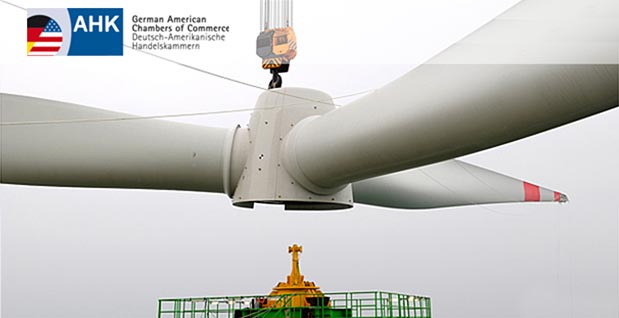
1st TOWER & OWL Conference 2010
Join us for the premier of the Texas Offshore Wind Energy Conference (TOWER). From its history as an independent nation in the 19th Century to its role as a global energy leader in the 21st Century, Texas has operated under unique laws and is positioned to be the pacesetter for offshore wind development in the Western Hemisphere.
With substantial state control of policies, permits, and electric grid, Texas is the place to do business in offshore wind in the USA and the Western Hemisphere. TOWER – the Texas Offshore Wind Energy Roundtable conference and expo – and OWL – the Offshore Wind Law continuing legal education conference – will provide you with the tools and business network to make profitable investments in Texas offshore wind from the outset.
Launching in October 2010, this premier conference combination will be an annual event that grows along with the reality and multi-gigawatt potential of the Texas industry. Hear directly from the permitting agencies, authorized project developers, turbine-ready equipment manufacturers, experienced European offshore wind operators, and more.
If you intend to stake a claim in offshore wind, this is a conference that you cannot afford to miss.
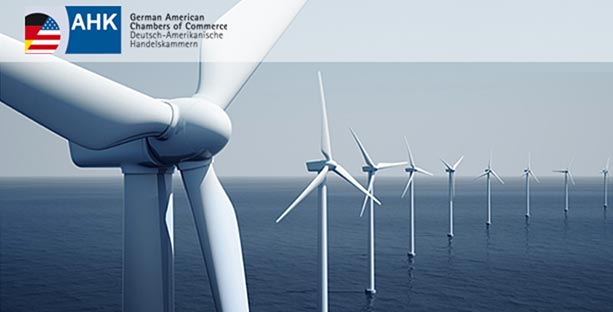
2nd TOWER & OWL Conference 2011
The 2nd Texas Offshore Wind Energy Roundtable (TOWER) and Offshore Wind Law Conference (OWL), which took October 3-4, 2011 in Houston, TX, celebrates another successful year.
From its history as an independent nation in the 19th Century, to its role as a global energy leader in the 21st Century, Texas operates under unique laws and is positioned to be the pacesetter for offshore wind energy development in the Americas. In June 2011, Baryonyx Corporation announced that it has submitted an application to the US Army Corps of Engineers in Galveston for permits to construct offshore wind farms within state waters off of the coast of Texas. If fully developed, these sites could have an installed capacity of up to 3 GW.
Following up on last year's success, TOWER brought together exhibitors and attendees who are interested in becoming players in this new and highly promising market. This year's program addressed the state of the industry globally and locally as well as turbine showcases, installation, ports & infrastructure, Offshore Wind Law, environmental issues and Finance & Insurance topics. A conference program with the agenda and speaker topics can be found here. Offshore Wind Law (OWL) was approved for Minimum Continuing Legal Education (MCLE) credit by the State Bar of Texas Committee on MCLE in the amount of 12.0 hours, of which 0.0 hours applies to legal ethics/professional responsibility credit.
4th TOWER & OWL Conference 2013
|
TOWER 2013 will feature more than 25 hours of intensive, cutting-edge information and powerful networking. Discover the latest in industry products and services and find solutions for your business challenges.
This year's TOWER speakers includes: * Amanda Duhon, Vice Consul, UKTI * John Pappas, Wind Energy Director, Texas A&M Energy Institute * Ian Hatton, CEO, Baryonyx * Maggie Iglesias-Turner, General Cargo and Tariff Manager, Port of Corpus Christi * Beth Emery, Partner, Husch & Blackwell LLP * Douglas Hines, President & CEO, Offshore Wind Power Systems of Texas llc * Manti Cummins, Project Director, Amshore * Greg Friend, Partner, Stahl, Bernal & Davies, LLP * Thomas Mousten, Siemens Energy, Inc. * Jim Sinclair, Co-Owner, TX-ESA |
|
Date, Venue & Registration
|
|
| Date: | Tuesday, August 27, 2013 - Wednesday, August 28, 2013 |
| Time: | 8:30am - 5:00pm |
| Venue: |
Four Oaks Place
|
| Admission Early Bird: |
$495 for GACC South & Partner members $595 for non-members |
Press Releases
10/2/2013 /http://energy.gov
New Report Shows Trend Toward Larger Offshore Wind Systems, with 11 advanced stage projects proposed in U.S.water
October 23, 2013
The Energy Department today released a new report showing progress for the U.S. offshore wind energy market in 2012, including the completion of two commercial lease auctions for federal Wind Energy Areas and 11 commercial-scale U.S. projects representing over 3,800 megawatts (MW) of capacity reaching an advanced stage of development. Further, the report highlights global trends toward building offshore turbines in deeper waters and using larger, more efficient turbines in offshore wind farms, increasing the amount of electricity delivered to consumers.
This year’s U.S. Offshore Wind Market and Economic Analysis, authored by the Navigant Consortium for the Energy Department, builds on last year’s report, providing additional information on offshore wind’s potential to add to U.S. electricity capacity and create jobs, as well as outlining policy developments that influence the sector. This report, along with other offshore wind R&D projects that began in 2011 and advanced technology demonstration projects announced in 2012, are part of the Department's national offshore wind strategy, supporting the development of a suite of tools and advanced engineering prototypes that can assist offshore wind project developers and industry stakeholders.
The offshore wind market assessment report will be updated and published annually for a three-year period, providing stakeholders with a reliable and consistent data source. Over time, it will also inform development of a road map for accelerating development and increasing U.S. competitiveness in the offshore wind market.
The 2013 report's key findings include:
- Eleven offshore wind projects representing 3,824 MW of capacity are currently in an advanced stage of development in the United States, which includes projects that have at least signed a power purchase agreement, received approval for an interim or commercial lease in state or federal waters, or conducted baseline or geophysical studies at the proposed site.
- Globally, offshore wind development continues to move farther from shore into increasingly deeper waters; parallel increases in turbine sizes and hub heights are contributing to higher efficiencies (capacity factors).
- The average turbine size for advanced-stage, planned projects in the United States is expected to range between 4 and 5 MW, which is larger than turbines being used in land-based applications.
- Developers continue to test a variety of platform and foundation types as the industry seeks to address deeper waters, varying seabed conditions, increasing turbine sizes, and the increased severity of wind and wave loading at offshore wind projects.
- The main challenges faced by U.S. offshore wind developers are cost-competitiveness, a lack of infrastructure such as offshore transmission and purpose-built ports and vessels, and uncertain and lengthy regulatory processes.
- Transmission infrastructure projects that saw progress in 2013 included the Atlantic Wind Connection and the New Jersey Energy Link.
The Energy Department's Office of Energy Efficiency and Renewable Energy accelerates development and facilitates deployment of energy efficiency and renewable energy technologies and market-based solutions that strengthen U.S. energy security, environmental quality, and economic vitality. Learn more about the Department's efforts to research, test, develop, and deploy innovative offshore wind energy technologies.
Nation’s largest wind farm proposed for West Texas
Posted on September 25, 2013 by(Michael Paulsen / Houston Chronicle)
The city of Houston will buy half of its electricity from renewable sources. (Michael Paulsen / Houston Chronicle)
DALLAS — A Dallas-based wind-power developer has proposed an array of as many as 650 wind turbines for 190 square miles of the Texas South Plains.
Tri Global Energy LLC announced plans for Hale Community Energy on Tuesday. The vast wind farm would extend from Abernathy over much of eastern Hale County on land Tri Global says is controlled by more than 340 owners and has more than 450 shareholders.
The company says the complex would be developed in five phases to be operational by mid-2018 with a generating capacity of 1,100 megawatts. The first, 200-megawatt phase is to be operational by late 2015.
Tri Global Vice President Curtis King says after construction, the complex would provide at least 100 permanent jobs.
Wind Turbine Makers Poised for Return to Profitability
Posted By Alex Morales - Aug 22, 2013 / www.bloomberg.com
Wind-turbine makers are poised to make their first profit in years after shutting underused factories and abandoning a drive for growth at all costs.
Vestas Wind Systems A/S (VWS) of Denmark, the world’s biggest manufacturer, along with German competitor Nordex SE (NDX1) are forecast to have their first pretax profits this year since 2010, according to analyst forecasts compiled by Bloomberg. Gamesa Corp. Tecnologica SA (GAM) is predicted to make a net profit after a loss last year. Investors haven’t waited, driving up shares of the three companies an average 220 percent in 2013.
After manufacturers cut at least 9,000 jobs and closed the least efficient plants, turbine prices may rise for the first time since 2009. That’s helping them cope with European subsidy cuts and bruising competition that lowered prices by a quarter in an industry that drew $75 billion of investment last year.
“Overcapacity and the price war was a big part of the crisis,” Juergen Zeschky, chief executive officer of Hamburg-based Nordex, said by phone. “Now companies are doing their homework and becoming more efficient, optimizing their processes and achieving further cost reductions.”
The result is the three turbine makers lead the 31-percent recovery in clean energy shares this year along with billionaire Elon Musk’s electric-car maker Tesla Motors Inc. (TSLA), the top performer that has quadrupled, and California solar-panel maker Sunpower Corp. (SPWR), which has tripled.
Share Rally
Vestas in Aarhus, Denmark, surged to 109 Danish kroner through yesterday from 32 kroner at the end of December. The stock peaked at an intraday 700 kroner in June 2008 and hit a 14-year low last year. Spain’s Gamesa has more than tripled this year after reaching an all-time low last year. Nordex recovered 180 percent in 2013 after hitting a seven-year low last year.
“We’re definitely past the worst,” said Jacob Pedersen, an analyst at Sydbank A/S (SYDB) in Aabenraa, Denmark. “We’re seeing order intakes improve and positive earnings revisions.”
The outlook is not uniformly optimistic. Turbine demand is forecast to fall about a quarter to 36 gigawatts this year, according to Bloomberg New Energy Finance. The researcher expects a 5 percent drop in China, which may hurt domestic manufacturers Xinjiang Goldwind Science & Technology Co. and Sinovel Wind Group (601558) Co.
Earnings Rebound
Even so, most of the manufacturers are in the middle of cost-cutting programs that are beginning to show results. Suzlon Energy Ltd. (SUEL), which had the biggest Indian convertible bond default in history, is forecast to return to an operating profit this year, though interest payments will wipe that out.
Vestas is predicted to post operating profit of 103 million euros, according to the average of analysts surveyed by Bloomberg. Interest, tax and costs would push it into a net loss. Nordex may post a net profit of 10 million euros, and Gamesa is predicted to have a 41 million-euros profit, according to the forecasts.
Vestas is less than five months away from completing a two-year program to reduce expenses by 400 million euros and its workforce by about 30 percent. On Aug. 21, it replaced Chief Executive Officer Ditlev Engel with Ericsson AB executive Anders Runevad as second-quarter losses widened.
“If we execute our plans, then we will be profitable when we present our full-year results,” Chief Marketing Officer Morten Albaek said by phone.
Bigger Rivals
The “pure-play” manufacturers have suffered more than competitors such as General Electric Co. (GE) and Siemens AG (SIE), which are bigger industrial conglomerates.
GE Wind’s orders fell by a third last year while the company supplanted Vestas as the biggest turbine supplier, according to Navigant Consulting Inc. (NCI)’s BTM Consult.
Profit at Siemens’ wind unit declined 15 percent in the accounting year ended September 2012. Orders fell 24 percent. It’s working to cut 615 jobs, anticipating a smaller U.S. market.
At Nordex, Zeschky announced factory closures in the U.S. and China after taking over in March 2012. Those will slash a quarter of its manufacturing capacity.
“There’s still a lot of growing up to do,” said Zeschky of Nordex, which returned to profit in the first half of 2013. “It’s still a challenging market.”
Gamesa Outlook
Gamesa, which is based in Zamudio, Spain, reported a profit of 22 million euros for the first six months of the year after a loss last year. It’s announced 2,600 job cuts and will shut 24 offices to save 100 million euros a year.
“This industry was causing its own demise by building more factories everywhere and continuously competing on price,” said Daniel Patterson, an analyst at SEB AB in Copenhagen. “They’ve all woken up to reality.”
Cuts by the biggest manufacturers have reduced potential turbine supply 11 percent to about 72 gigawatts this year, according to Daniel Shurey, an analyst at New Energy Finance in London. A further reduction to about 67 gigawatts is predicted by 2016. Global installations were 44.8 gigawatts last year. A gigawatt is enough to supply 300,000 homes in the U.S.
“The huge cost reduction efforts of all the main manufacturers are starting to kick in,” Shurey said. “Capacity is starting to move down, in line with the lower demand.”
Tighter supply is helping boost prices. Machines for delivery in the first half of 2014 are selling for 1.01 euros a megawatt compared with 880,000 euros for those to be shipped in the second half of 2013, New Energy Finance estimates.
Gamesa Chief Executive Officer Ignacio Martin said on July 23 that there’s been “a stabilization of volumes and prices that is expected to continue.” GE Vice Chairman Keith Sherin said July 19 that pricing for renewables orders is up 11 percent, with new wind products “the biggest piece” of that.
“That’s a very interesting potential inflection point,” Patterson said. “If prices start to go up, then this entire industry and the stocks have more runway left.”
5th TOWER & OWL Conference 2014
The 5th Texas Offshore Wind Energy Roundtable (TOWER) Conference & Offshore Wind Law (OWL) Conference will take place in Houston, TX on 2014.

The 5th Texas Offshore Wind Energy Roundtable (TOWER Conference) & Offshore Wind Law (OWL) Conference, hosted by the Houston office of the German American Chamber of Commerce of the Southern US, Inc., seeks to help industry leaders from Texas realize opportunity by bringing some of the leading experts from Europe and the US to Houston. Conference participants will catch up on the latest developments in the Texas offshore wind market and will be able to network with some of the biggest players in the offshore industry from the Gulf Coast region.
Featuring more than 25 hours of intensive, cutting-edge information and powerful networking, this year's program addresses the state of the industry globally and locally. The conference features turbine showcases, installation, ports & infrastructure, offshore wind law, environmental issues and finance & insurance topics.
Enhance your image and increase your visibility. Let the TOWER attendees know that you belong to the market leaders of the wind industry… your industry.
TOWER attendees represent the core of wind professionals actively looking for new business opportunities and partners, as well as solutions and education on all things related to wind – on- and offshore.
Sponsoring TOWER provides you with an ideal platform to promote your products and services to the wind industry.
Make a lasting impression on the TOWER attendees and establish yourself as the market leader.
+++
The 5th TOWER Conference will take place in Houston, TX on September 9-10 2014.
2014 promises a year of rapid development with secured growth of major wind energy markets as wind energy remains the fastest growing alternative energy in the world.
Hosted by the Houston office of the German American Chamber of Commerce of the Southern US, Inc., the 5th TOWER Conference will unite wind energy experts from Europe, Mexico, Canada and the US in interactive discussion on the latest developments and opportunities in the North American wind market. The TOWER Conference will provide participants the opportunity to advance organizational missions while networking with global wind industry leaders.
While Germany and the U.K. continue to drive the wind energy market, expectations of stabilization and growth in both the US and China wind energy markets, as well as the emerging growth of markets in countries such as Sweden, Denmark, Poland and Turkey, guarantees a significant improvement in the wind energy markets in 2014, after global wind demand lessened in 2013.
In addition, the recent energy reforms in Mexico, passed in December 2013, will open all segments of the energy sector to private firms, subsequently increasing economic activity in Texas border cities and the demand for infrastructure improvement throughout Mexico.
This year’s program will address the state of the wind industry globally and locally through 25 hours of cutting-edge information, intensive discussion and powerful networking. Topics will include wind law, environmental issues, ports & infrastructure, finance & insurance, and turbine installations.
TOWER attendees represent the core of global wind energy professionals that are actively searching for new business opportunities and partners, as well as solutions and education on all things related to wind- on- and offshore.
TOWER offers sponsorship opportunities that provide an ideal platform to enhance your image and increase your visibility as a market leader in the wind industry. Sponsors also have the opportunity to utilize exhibitor space to promote their products and services to TOWER attendees.
To connect, learn and engage with global wind energy leaders, register here to attend the TOWER conference.
More Background On Tower-Conference.com
Tower-Conference.com was the official online platform for the Texas Offshore Wind Energy Roundtable (TOWER) Conference and the Offshore Wind Law (OWL) Conference, a specialized renewable energy and legal industry gathering held in Houston, Texas from 2010 through 2014. The website documented one of the earliest organized efforts to establish Texas as a leader in offshore wind energy development in the United States. During a period when offshore wind was still largely experimental in America, the conference series brought together developers, attorneys, engineers, policymakers, manufacturers, financiers, and infrastructure experts to explore the opportunities and challenges associated with building wind energy projects in the Gulf of Mexico.
The conference emerged during a transformational moment in the global energy industry. European nations had already begun aggressively expanding offshore wind capacity, while the United States lagged behind in both infrastructure and policy development. Organizers behind TOWER believed Texas possessed a rare combination of legal authority, industrial capability, coastal access, and energy expertise that could position the state at the forefront of the American offshore wind market.
Tower-Conference.com served not only as a registration and promotional site, but also as an informational archive for conference programs, speaker announcements, policy discussions, industry trends, and energy news related to offshore wind development. Today, the website represents an important snapshot of early offshore wind ambitions in the Gulf Coast region and the broader transition toward renewable energy in North America.
The Birth of Offshore Wind Ambitions in Texas
By the late 2000s, offshore wind energy had become one of the fastest-growing renewable energy sectors in Europe. Massive offshore wind farms were being developed in countries such as Germany, Denmark, and the United Kingdom. These projects demonstrated that offshore turbines could produce significant amounts of electricity while avoiding some of the land-use conflicts associated with onshore wind farms.
In the United States, however, offshore wind development faced substantial regulatory, political, and logistical barriers. Many proposed projects struggled with federal permitting delays, environmental reviews, infrastructure limitations, and legal uncertainty.
Texas stood apart from other states because of its unique jurisdictional advantages. Under state law, Texas controlled coastal waters extending farther offshore than most other states. This meant certain offshore projects could potentially move forward under state oversight without requiring the same degree of federal approval that projects elsewhere would need.
The Gulf Coast also possessed a massive offshore engineering ecosystem developed through decades of oil and gas exploration. Houston already housed many of the maritime engineering firms, fabrication facilities, logistics providers, and energy service companies needed for offshore construction. Organizers behind the TOWER Conference believed this existing industrial base could transition naturally into offshore wind development.
The conference materials repeatedly emphasized that Texas was uniquely positioned to become the offshore wind capital of the Americas. Organizers promoted the idea that the same expertise used to build offshore drilling platforms could also support offshore wind turbine installations.
The Founding Organizations
The conference series was hosted primarily by the Houston office of the German American Chamber of Commerce of the Southern United States. The involvement of German business organizations was highly significant because Germany was already recognized as a global leader in offshore wind technology and renewable energy policy.
German engineering firms, turbine manufacturers, and infrastructure companies were actively searching for opportunities in emerging North American markets. The conference became a bridge between European offshore wind expertise and Texas energy infrastructure.
The Texas Wind Energy Clearinghouse also played a key role in organizing and supporting the event. The organization worked to encourage wind energy development within Texas and served as an information-sharing platform for industry participants.
The collaboration between European renewable energy leaders and Texas energy stakeholders reflected the increasingly global nature of the renewable energy market during the early 2010s.
The First TOWER Conference in 2010
The inaugural TOWER and OWL Conference took place in October 2010 at Hotel Derek in Houston, Texas. The event was heavily promoted as the first major offshore wind conference focused specifically on Texas and Gulf Coast development.
Conference organizers described the gathering as an opportunity for companies to “stake a claim” in the emerging offshore wind market. The event aimed to connect developers, manufacturers, investors, legal experts, and government agencies involved in offshore wind planning.
The conference attracted more than 40 speakers and participants from major international energy and engineering firms. Companies represented included:
- E.ON Climate and Renewables Europe
- Siemens
- Hochtief Construction
- Vestas Offshore
- SIAG
- Thales
These firms were already major players in European offshore wind projects and were looking toward future expansion opportunities in North America.
Featured speakers included renewable energy executives, turbine manufacturers, Texas government officials, and infrastructure specialists. Discussions focused on:
- Offshore turbine technology
- Gulf Coast development opportunities
- State and federal permitting
- Financing renewable energy projects
- Port infrastructure
- Grid transmission systems
- Offshore construction methods
- Environmental impacts
- Maritime legal frameworks
The OWL Conference portion focused specifically on legal and regulatory topics. Attorneys and policymakers discussed offshore leasing rights, environmental law, permitting requirements, and jurisdictional issues affecting offshore wind projects.
Houston as the Energy Capital
The choice of Houston as the conference location was highly intentional. Houston had long been recognized as one of the world’s most important energy capitals due to its concentration of oil and gas companies, engineering firms, shipping infrastructure, and energy finance institutions.
Conference organizers argued that offshore wind development represented a natural extension of Houston’s offshore expertise. Many of the same companies that built offshore drilling platforms, pipelines, and subsea infrastructure could potentially diversify into renewable energy construction.
This positioning was especially important during a period when the energy industry was beginning to consider long-term diversification beyond fossil fuels. Offshore wind represented both a technological opportunity and a potential new economic sector for Gulf Coast businesses.
The conference repeatedly emphasized that offshore wind was not intended to replace traditional energy industries overnight, but rather to create additional opportunities for engineering, manufacturing, logistics, and infrastructure firms already operating in the region.
Texas Offshore Wind Potential
One of the core themes promoted through Tower-Conference.com was the enormous offshore wind potential of Texas coastal waters.
Industry reports discussed during the conferences suggested that offshore wind resources in the Gulf of Mexico could eventually generate substantial amounts of electricity. Texas officials and renewable energy advocates argued that offshore wind could complement the state’s already strong onshore wind industry.
Texas had already become a national leader in land-based wind generation by the early 2010s. Massive wind farms in West Texas had demonstrated the state’s willingness to invest in large-scale renewable infrastructure.
Conference participants explored whether this success could be extended offshore.
Particular attention focused on areas near Galveston Island and the broader Gulf Coast region. Proposed projects discussed during the conference included multi-gigawatt offshore wind farms that, if fully developed, could power hundreds of thousands of homes.
Offshore Wind Law and Regulatory Challenges
The OWL Conference became one of the most distinctive features of the TOWER event series because offshore wind development involved highly complex legal issues.
Unlike onshore renewable projects, offshore developments required coordination between multiple agencies and regulatory systems. Legal experts at the conference discussed:
- Coastal jurisdiction rights
- Environmental impact reviews
- Federal versus state authority
- Leasing structures
- Maritime law
- Transmission rights
- Insurance and liability issues
- Navigational safety regulations
- Wildlife and fisheries concerns
The legal environment for offshore wind in the United States remained uncertain during the early 2010s. Developers often faced lengthy permitting processes and unclear regulatory frameworks.
Texas organizers believed the state’s unique legal structure gave it an advantage over East Coast competitors. The conference promoted Texas as a region where projects could potentially move forward more efficiently.
The OWL legal sessions also offered continuing legal education credits for attorneys, helping attract legal professionals interested in renewable energy law.
Industry Participation and International Influence
One of the defining characteristics of the TOWER conferences was the strong international participation, particularly from European companies.
European offshore wind developers already possessed years of operational experience in offshore turbine deployment, subsea cable installation, and marine construction. The conference created opportunities for knowledge transfer between European experts and American energy stakeholders.
Participants included representatives from:
- Turbine manufacturers
- Port authorities
- Infrastructure developers
- Environmental consultants
- Maritime engineering firms
- Financial institutions
- Government agencies
- Renewable energy investors
This international collaboration reflected growing recognition that offshore wind development required global expertise and partnerships.
The 2011 Expansion
The second TOWER and OWL Conference in 2011 demonstrated that interest in offshore wind development remained strong despite ongoing economic uncertainty following the financial crisis.
Conference discussions became more detailed and technically sophisticated. Topics expanded to include:
- Offshore installation methods
- Specialized vessels
- Financing structures
- Environmental monitoring
- Supply chain logistics
- Insurance markets
- Grid integration
The conference also highlighted proposed offshore projects involving Baryonyx Corporation, which sought permits for offshore wind farms in Texas coastal waters.
These discussions suggested that offshore wind development in Texas was moving from conceptual planning toward potential project implementation.
The Role of Ports and Infrastructure
Port infrastructure became one of the most heavily discussed topics during later conferences.
Offshore wind farms require enormous logistical support systems, including:
- Deep-water ports
- Heavy-lift cranes
- Manufacturing facilities
- Turbine assembly areas
- Specialized installation vessels
- Transmission infrastructure
Texas ports such as Corpus Christi and Houston were viewed as potentially ideal staging locations for offshore wind development.
Conference speakers discussed how Gulf Coast ports could benefit economically from renewable energy investments through job creation, manufacturing growth, and increased shipping activity.
This economic development angle became increasingly important as organizers sought support from local governments and regional business leaders.
Offshore Wind and the Broader Energy Transition
The TOWER conferences took place during a broader global shift toward renewable energy investment.
Although oil and gas still dominated the Texas economy, renewable energy was beginning to gain mainstream attention from investors, policymakers, and major corporations.
Conference materials often framed offshore wind not as a fringe environmental movement, but as a serious industrial opportunity capable of generating jobs, investment, and technological innovation.
The events attempted to position Texas as a future leader in both traditional and renewable energy sectors simultaneously.
Media Coverage and Industry Visibility
Tower-Conference.com and the TOWER conferences received coverage from renewable energy publications, business journals, and energy industry media outlets.
Coverage often emphasized:
- Texas’s unique legal framework
- The Gulf Coast’s offshore engineering expertise
- European investment interest
- Potential economic development opportunities
- Early-stage offshore wind projects
The conference helped raise visibility for offshore wind discussions within the traditionally oil-focused Texas energy market.
Industry media frequently portrayed the event as evidence that renewable energy was becoming increasingly integrated into mainstream energy conversations.
The 2013 and 2014 Conferences
By 2013 and 2014, the conference had matured into a larger networking and educational platform.
Conference organizers promoted more than 25 hours of technical sessions, panel discussions, and networking opportunities. Topics included:
- Environmental regulation
- Wind financing
- Turbine installation
- Offshore infrastructure
- Insurance
- Port development
- International market trends
- Cross-border energy investment
The 2014 conference also reflected growing interest in Mexico’s energy reforms, which opened portions of the Mexican energy sector to private investment. Organizers suggested this could increase infrastructure and energy collaboration between Texas and Mexico.
The conference increasingly positioned itself as an international North American wind energy event rather than simply a Texas-focused gathering.
Economic and Cultural Significance
Although offshore wind development in Texas did not expand as rapidly as conference organizers originally envisioned, Tower-Conference.com remains historically important because it documented an early effort to integrate renewable energy into the Gulf Coast industrial economy.
The conference represented:
- A transition point in American energy policy
- Early optimism surrounding offshore wind
- International renewable energy collaboration
- The blending of legal, engineering, and environmental disciplines
- Attempts to diversify Gulf Coast energy industries
It also demonstrated how renewable energy advocates sought to align clean energy development with existing industrial strengths rather than framing it solely as environmental activism.
The TOWER and OWL conferences reflected a broader recognition that offshore wind would require cooperation among governments, private industry, infrastructure developers, attorneys, and international partners.
Why the Website Still Matters
Today, Tower-Conference.com serves as an archival record of a formative period in U.S. offshore wind development.
Many of the issues discussed during the conferences remain relevant today:
- Offshore permitting complexity
- Port infrastructure requirements
- Supply chain development
- Transmission challenges
- Financing structures
- Environmental review processes
Modern offshore wind projects along the East Coast and elsewhere continue to confront many of the same legal and engineering questions explored during the TOWER and OWL events.
The website also illustrates how Texas once appeared poised to become a major offshore wind leader before other regions ultimately advanced more rapidly in commercial offshore wind deployment.
As offshore wind continues expanding in the United States, Tower-Conference.com provides valuable historical insight into the industry’s early ambitions, challenges, and strategic thinking.
Tower-Conference.com was far more than a simple conference website. It documented a pioneering effort to establish Texas as a central hub for offshore wind energy development during a critical early stage of the American renewable energy industry.
Through the TOWER and OWL conferences, the site connected international renewable energy experts, Gulf Coast infrastructure leaders, government officials, legal professionals, and investors in discussions about the future of offshore wind in the Gulf of Mexico.
The conferences highlighted Texas’s unique legal framework, extensive offshore engineering experience, and industrial infrastructure as potential advantages in the emerging offshore wind market. They also reflected broader global trends toward renewable energy investment and cross-border energy collaboration.
Although the ambitious offshore wind boom envisioned by organizers developed more slowly than anticipated, the website remains an important historical artifact documenting the optimism, innovation, and industrial strategy surrounding early offshore wind development in the United States.